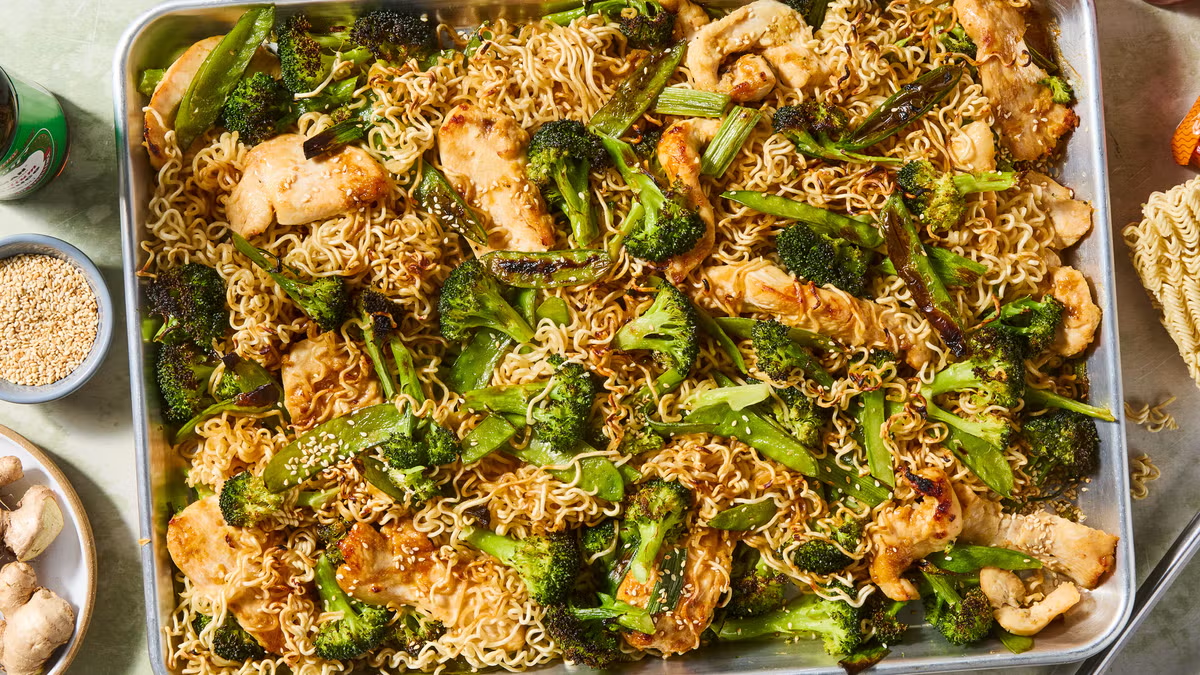
Easy Sheet Pan Dinners Made Simple for Real Life
Busy weeknights often leave little room for cooking something slow or complicated. That is where easy sheet pan dinners quietly solve the problem. Everything goes onto one tray, into the oven, and comes out as a full meal with very little effort. It is not about fancy cooking. It is about getting real food on the table without turning your kitchen into a mess.
The idea is simple. Protein, vegetables, seasoning, and heat. That is it. But when done right, the result is balanced, flavorful, and surprisingly satisfying.
What Sheet Pan Dinners Really Are
A sheet pan dinner is a complete meal cooked together on a single rimmed baking tray. Most meals include a protein like chicken, fish, or tofu paired with vegetables such as potatoes, carrots, broccoli, or peppers. Everything cooks in the oven at the same time or in stages.
This method works because dry oven heat creates roasting instead of boiling or steaming. That roasting effect builds flavor through browning and caramelization, which makes simple ingredients taste richer and deeper.
Food experts often describe sheet pan cooking as one of the easiest home cooking methods because it reduces steps and cleanup while still producing full meals with balanced ingredients. (premiofoods.com)
Why It Works So Well on Busy Nights
The real value of easy sheet pan dinners is not just convenience. It is how predictable and flexible they are.
You only need a few basics: a tray, an oven, and a few ingredients you already know how to use. Once everything is prepped, the oven takes over completely. That gives you time to rest, clean up early, or just step away from cooking altogether.
Another reason this method stands out is cleanup. With everything cooked on one surface, there are fewer pots, fewer pans, and far less washing afterward. That alone makes it a weeknight favorite in many households.
It also scales well. Whether you are cooking for one person or a family, you can adjust quantities without changing the process.
Tools That Make It Easier
You do not need a professional kitchen setup. A few basics are enough.
A sturdy rimmed baking sheet is the most important tool. It should be large enough to spread ingredients out in a single layer. Overcrowding changes how food cooks and can lead to steaming instead of roasting.
Parchment paper or foil helps with cleanup and prevents sticking. A sharp knife and a cutting board will handle prep work. Mixing bowls are useful but not always necessary if you season directly on the tray.
Some home cooks also use silicone mats for repeated use, but they are optional.
The Simple Rules That Make It Work
There are a few small habits that make a big difference in results.
Even cutting matters. When vegetables and proteins are similar in size, they cook at the same pace. If pieces are uneven, some will burn while others stay undercooked.
Spacing is just as important. Ingredients need room on the tray so hot air can circulate properly. Crowding traps moisture and changes the texture.
Temperature also matters. Most sheet pan meals cook well in the range of 400 to 425°F (about 200 to 220°C). This is hot enough to brown food without drying it out too quickly.
Finally, seasoning should not be an afterthought. Oil, salt, spices, and herbs should coat ingredients before cooking so flavors develop during roasting, not just after.
These small details are consistently highlighted in cooking guidance on sheet pan methods because they directly affect texture and taste.
Ingredients That Work Best
Not every ingredient behaves the same in the oven, so choosing the right mix helps.
Proteins
Chicken thighs, salmon, shrimp, and tofu are common choices. They cook relatively quickly and pair well with strong seasonings.
Vegetables
Root vegetables like potatoes and carrots take longer, while softer options like zucchini, peppers, and broccoli cook faster. Combining both gives balance.
Flavor Additions
Garlic, lemon, paprika, cumin, olive oil, and fresh herbs can completely change the final taste. A simple mix of spices often does more than complicated sauces.
How to Build a Sheet Pan Meal
A good sheet pan dinner follows a basic structure.
Start with your protein. Add vegetables that match cooking time. If needed, give denser vegetables a head start in the oven before adding quicker ones later.
Toss everything with oil and seasoning. Spread it out evenly. Bake until everything is cooked through and slightly browned.
Finish with something fresh if you want extra flavor. A squeeze of lemon or a sprinkle of herbs can brighten the entire dish.
This structure is why sheet pan cooking is so adaptable. You are not following strict recipes. You are building combinations.
Easy Sheet Pan Dinner Ideas
Here are simple combinations that work well without complicated steps.
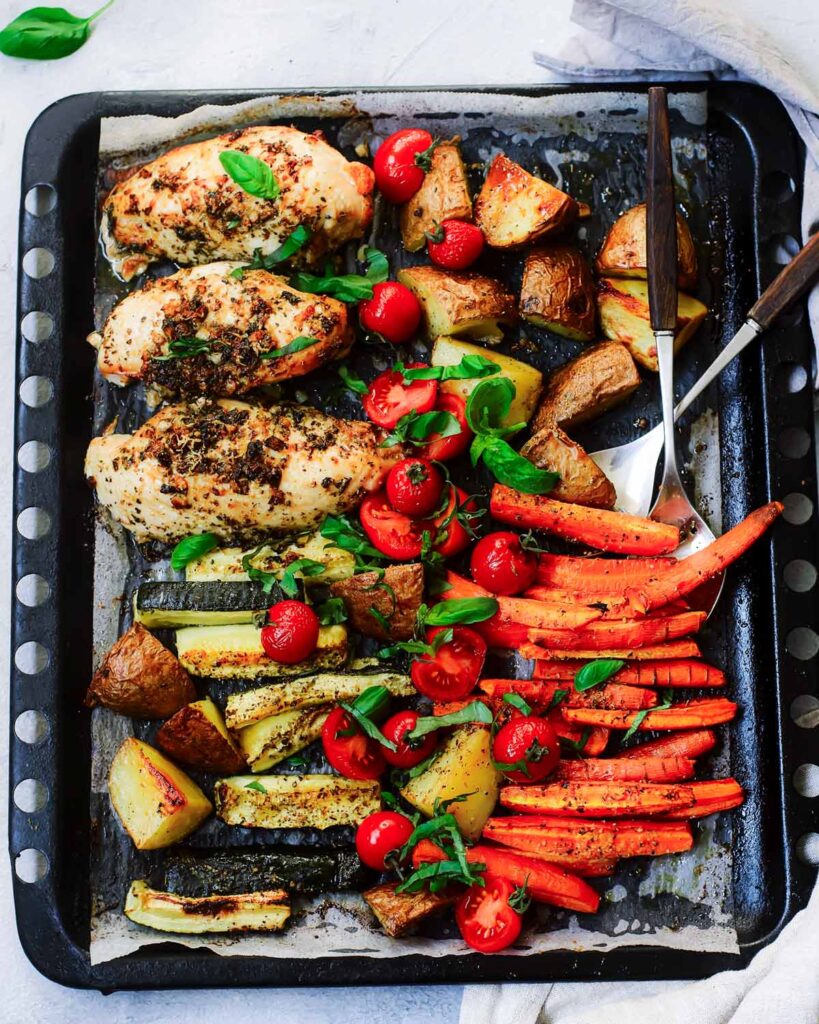
Chicken and Roasted Vegetables
Chicken thighs, potatoes, carrots, olive oil, garlic, and rosemary. A classic that is filling and reliable.
Lemon Salmon with Asparagus
Salmon fillets, asparagus, lemon slices, olive oil, salt, and pepper. Light but full of flavor.
Sausage and Peppers
Sliced sausage, bell peppers, onions, and Italian seasoning. Everything roasts into a smoky, savory mix.
Shrimp Fajita Tray
Shrimp, sliced peppers, onions, chili powder, lime juice, and a little oil. Fast cooking and full of spice.
Tofu and Broccoli
Tofu cubes, broccoli, soy sauce, garlic, and sesame oil. A simple plant-based option that still feels complete.
Mistakes That Can Ruin the Meal
Even simple cooking has a few common issues.
Overcrowding is the biggest one. When too much is packed onto the tray, food steams instead of roasting. That changes both texture and flavor.
Another issue is ignoring cooking times. Not all ingredients cook at the same speed. Root vegetables often need more time than proteins like shrimp or fish.
Skipping oil is also a mistake. Oil helps with browning and keeps ingredients from drying out.
Finally, uneven chopping leads to uneven cooking. Taking a few extra minutes to cut properly makes the final result more consistent.
Meal Prep With Sheet Pan Cooking
One of the most practical uses of easy sheet pan dinners is meal prep.
You can chop vegetables ahead of time and store them in containers. You can also pre-season proteins so they are ready to cook when needed. This reduces weeknight effort even further.
Cooked leftovers store well in the fridge and can be reheated quickly. Some people even repurpose them into wraps, rice bowls, or salads the next day.
This flexibility makes sheet pan meals useful beyond just dinner.
How to Adjust for Your Taste
Sheet pan dinners are not fixed recipes. They are flexible templates.
If you like spicy food, add chili flakes or hot sauce. If you prefer mild flavors, stick to herbs and lemon. You can swap vegetables based on season or availability.
You can also change the protein without changing the method. Chicken can become tofu. Salmon can become shrimp. The structure stays the same.
This adaptability is what keeps people coming back to this cooking style.
Why People Keep Coming Back to It
The reason easy sheet pan dinners stay popular is not just convenience. It is consistency.
They are predictable in a good way. You know what to expect, and you can adjust them based on what you have at home. There is also less stress involved. No juggling multiple pans, no complicated timing, and no long cleanup afterward.
Even experienced home cooks use this method on busy days because it keeps cooking simple without sacrificing a full meal.
Final Thoughts
Sheet pan dinners are not about replacing complex cooking. They are about making everyday cooking easier.
With a few ingredients and a single pan, you can put together meals that feel complete without taking up your whole evening. Once you understand the basic structure, you can mix and match endlessly.
That is what makes easy sheet pan dinners so practical. They fit into real life, especially when time and energy are limited.
The Best Hamstring Stretch Exercises for Tight Legs
FAQs
What makes sheet pan dinners so easy?
They use one pan, simple ingredients, and oven cooking, which reduces effort and cleanup.
Can I use frozen vegetables?
Yes, but they may release more water, so spacing and temperature matter.
What temperature works best?
Most meals cook well between 400 and 425°F for proper roasting.
How do I avoid soggy vegetables?
Do not overcrowd the pan and make sure everything is lightly coated in oil.
Are sheet pan dinners healthy?
They can be balanced when you include lean protein and plenty of vegetables.
