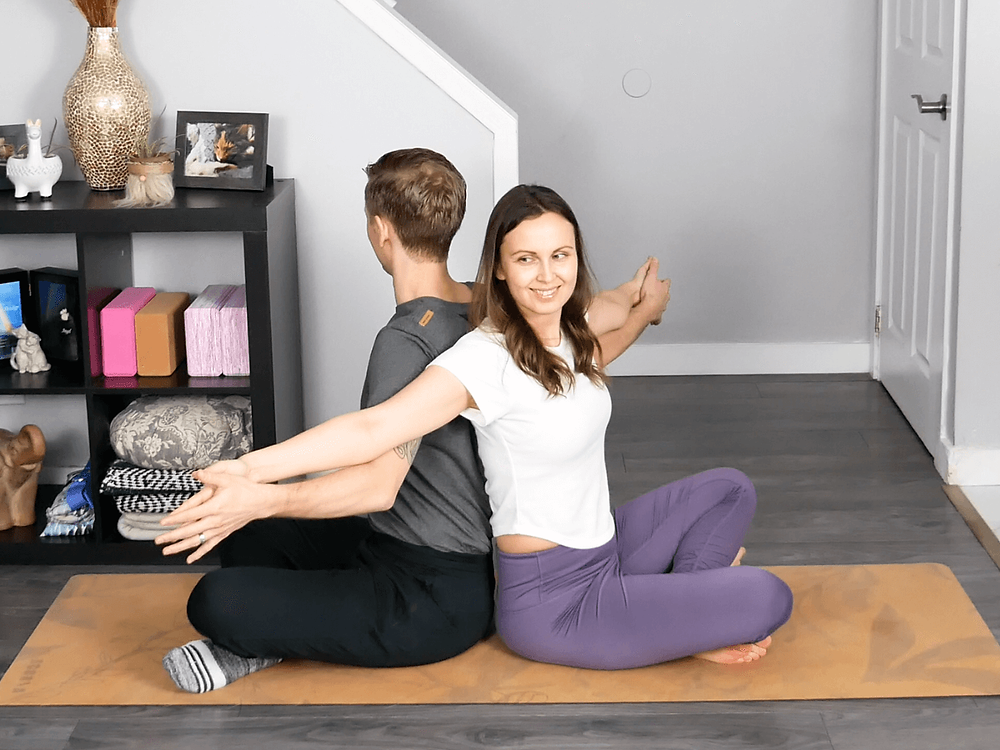
Introduction
Partner yoga is one of those practices that looks simple at first, but quickly shows how much coordination, trust, and awareness it really takes. Instead of moving alone on the mat, two people work together through movement and breath, helping each other find better alignment and stability.
At its core, this practice is not about performance. It is about shared movement and controlled support. When done regularly, it can help improve balance, increase flexibility, and build a stronger sense of body awareness. Research and expert reviews of yoga practices show that consistent yoga can improve flexibility within weeks and support better muscular control and stability over time, especially when movements are slow and intentional (Verywell Health).
This guide walks through simple partner yoga poses, how they work, and why they can be a useful addition to a regular movement routine.
What Partner Yoga Really Is
Partner yoga is a shared practice where two people support each other in different poses. That support can be physical, like holding hands for balance, or subtle, like matching breathing patterns or adjusting posture together.
Unlike solo yoga, where everything depends on individual control, partner-based practice introduces external feedback. One person’s balance directly affects the other, which naturally encourages focus and precision.
Traditional yoga styles already use tools like props and wall support. Partner yoga simply replaces those props with another person. This creates a more dynamic experience where communication becomes part of the practice itself.
Why It Improves Balance and Flexibility
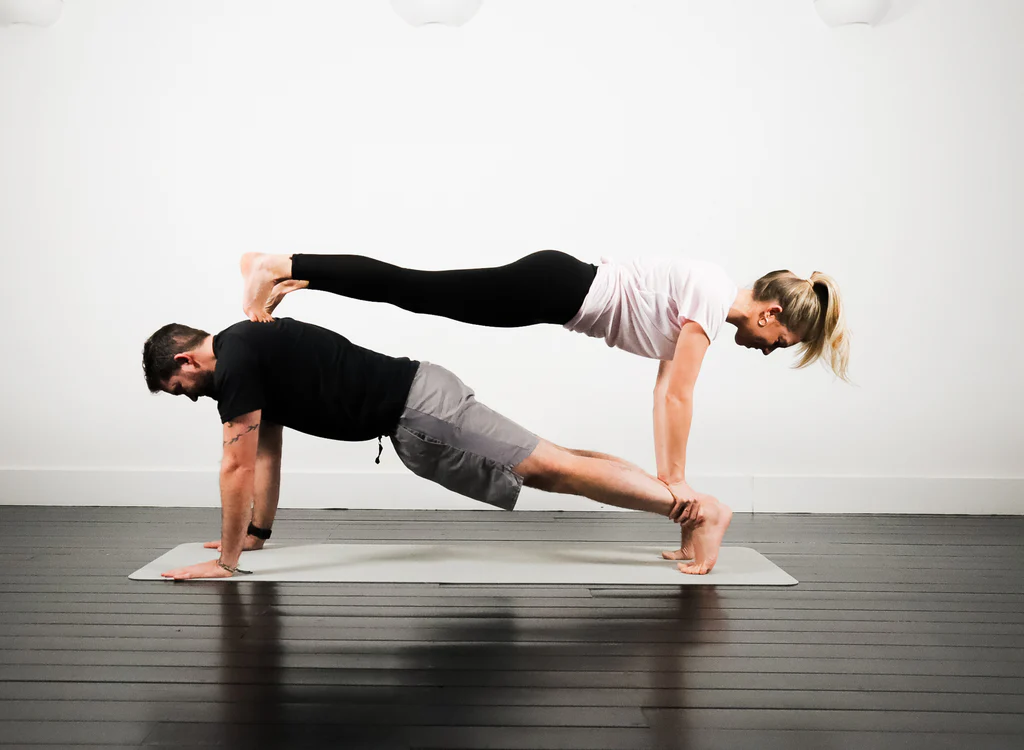
Balance in yoga is not just about standing on one leg. It is about how the body reacts to small shifts in weight and how quickly it can recover control. When another person is involved, those shifts become more noticeable, which forces the stabilizing muscles to engage more actively.
Flexibility also improves differently in partner work. Instead of forcing deeper stretches alone, one partner can provide gentle support or resistance. This allows muscles to relax more gradually, which is often safer and more effective than pushing too hard.
Studies and fitness experts often note that assisted stretching can help improve range of motion more efficiently than unassisted stretching, especially when done consistently and with control
Beyond the physical side, there is also a mental benefit. Shared movement increases focus and reduces distractions, which makes it easier to stay present in each pose.
Before You Start: Basic Safety and Preparation
Partner yoga works best when both people are comfortable and aware of each other’s limits.
A few simple things make a big difference:
- Start with light warm-up stretches
- Use a non-slip surface or yoga mat
- Communicate clearly during every movement
- Avoid forcing any position
- Move slowly instead of rushing into poses
It is also important to choose someone you feel comfortable working with. This does not need to be a romantic partner. A friend, sibling, or training partner works just as well.
Warm-Up for Better Movement
Before jumping into partner poses, the body should be gently prepared. This helps reduce strain and makes movements smoother.
Simple warm-up ideas include:
- Neck rolls and shoulder circles
- Gentle forward bends
- Cat-Cow spinal movement
- Light standing stretches
These movements help loosen the spine, hips, and shoulders, which are the areas most involved in partner work.
Simple Partner Yoga Poses for Balance and Flexibility
Seated Back-to-Back Breathing
Sit cross-legged back-to-back with your partner. Focus on slow breathing together, feeling the rise and fall of each breath.
This may look simple, but it builds awareness and helps both bodies align naturally. Over time, it also improves posture and calm focus.
It is often used as a starting point in partner-based yoga sessions because it helps synchronize rhythm and attention.
Partner Forward Fold
Sit facing each other with legs extended. Hold hands or forearms and take turns gently leaning forward while the other partner provides light resistance.
This movement helps stretch the hamstrings and lower back. It also teaches controlled support instead of forcing flexibility.
In assisted stretching, the goal is not depth but comfort and gradual release. That approach is often recommended in modern flexibility training methods.
Double Tree Pose
Stand side by side and lightly hold each other for support. Each person lifts one foot and places it against the opposite leg while maintaining balance.
This pose strengthens ankles, calves, and core muscles. It also improves focus because both partners must stay steady for the pose to work.
Balance-based poses like this are commonly used in yoga training because they activate stabilizing muscles that are often underused in daily movement.
Partner Twist
Sit facing each other. Place one hand on your partner’s knee and gently rotate your torso in opposite directions.
This improves spinal mobility and helps release tension in the back. Twisting movements are often used in yoga to support digestive function and spinal flexibility.
The key here is control. Twists should feel smooth, not forced.
Supported Boat Pose
Sit facing each other, knees bent, and hold hands. Slowly lift your feet and press soles together, forming a shared balance shape.
This strengthens the core and improves coordination. Because both partners are involved, balance depends on timing and trust.
Core-focused yoga poses like this are widely used in fitness routines because they improve stability and posture over time.
Back-to-Back Chair Pose
Stand back-to-back and slowly lower into a seated position while keeping contact with each other’s backs.
This strengthens the thighs, glutes, and lower back. It also teaches controlled weight sharing, which is an important concept in partner movement.
Chair variations are often used in yoga conditioning because they build endurance in the lower body.
How Balance Improves Over Time
Balance is not something that develops overnight. It improves gradually as the body learns how to adjust under changing conditions.
In partner yoga, the constant small adjustments required during poses train the nervous system to respond faster. This improves coordination in everyday movement, not just on the mat.
Over time, you may notice:
- Less wobbling in standing poses
- Better posture control
- Improved body awareness
- Stronger core engagement
How Flexibility Develops Safely
Flexibility should never feel forced. In partner practice, the safest progress happens when both people move slowly and respect limits.
Key principles include:
- Stretching only to a comfortable point
- Using breath to relax deeper into positions
- Avoiding sudden pressure
- Building range gradually over time
Most modern flexibility training approaches agree that consistency matters more than intensity.
Common Mistakes to Avoid
A few simple mistakes can reduce the effectiveness of practice:
- Moving too quickly into advanced poses
- Not communicating during transitions
- Ignoring discomfort or pain signals
- Relying too heavily on the partner for balance
- Skipping warm-up routines
Partner yoga works best when both people stay engaged and aware throughout the session.
Who Can Benefit From It
This type of practice is suitable for many people, not just experienced yoga practitioners.
It works well for:
- Beginners learning balance control
- Friends wanting a shared activity
- Couples looking for mindful movement
- Anyone wanting to improve flexibility safely
The simplicity of the poses makes it easy to start without needing advanced fitness levels.
Building a Simple Routine
A short routine can be very effective if done regularly.
A basic structure might look like:
- 5 minutes of breathing and warm-up
- 10 to 15 minutes of partner poses
- 5 minutes of relaxed stretching or cool down
Even short sessions can create noticeable improvements if practiced consistently.
Conclusion
Partner yoga is less about complexity and more about coordination. When two people move together with focus and patience, the body naturally becomes more stable and flexible.
The real benefit comes from repetition and awareness. Over time, simple poses start to feel easier, balance becomes more natural, and flexibility develops without strain.
It is a practice that builds both physical control and shared rhythm, making it a useful addition to any regular movement routine.
What Is PCOS Belly and Can You Reduce It Naturally?
FAQs
Is partner yoga safe for beginners?
Yes, it is generally safe for beginners as long as both partners move slowly and avoid pushing into painful positions. Starting with simple poses makes it easier to build confidence and control.
Do both partners need the same fitness level?
No, matching fitness levels is not required. The focus is on coordination and communication, not competition or identical strength.
What if we lose balance during a pose?
Losing balance is normal. The safest approach is to step out of the pose calmly and try again with slower movement and better alignment.
How often should we practice partner yoga?
Practicing two to three times a week is enough for steady improvement in balance, flexibility, and coordination.
Can partner yoga replace regular workouts?
It can support fitness but should not fully replace a complete exercise routine. It works best when combined with other forms of movement.
