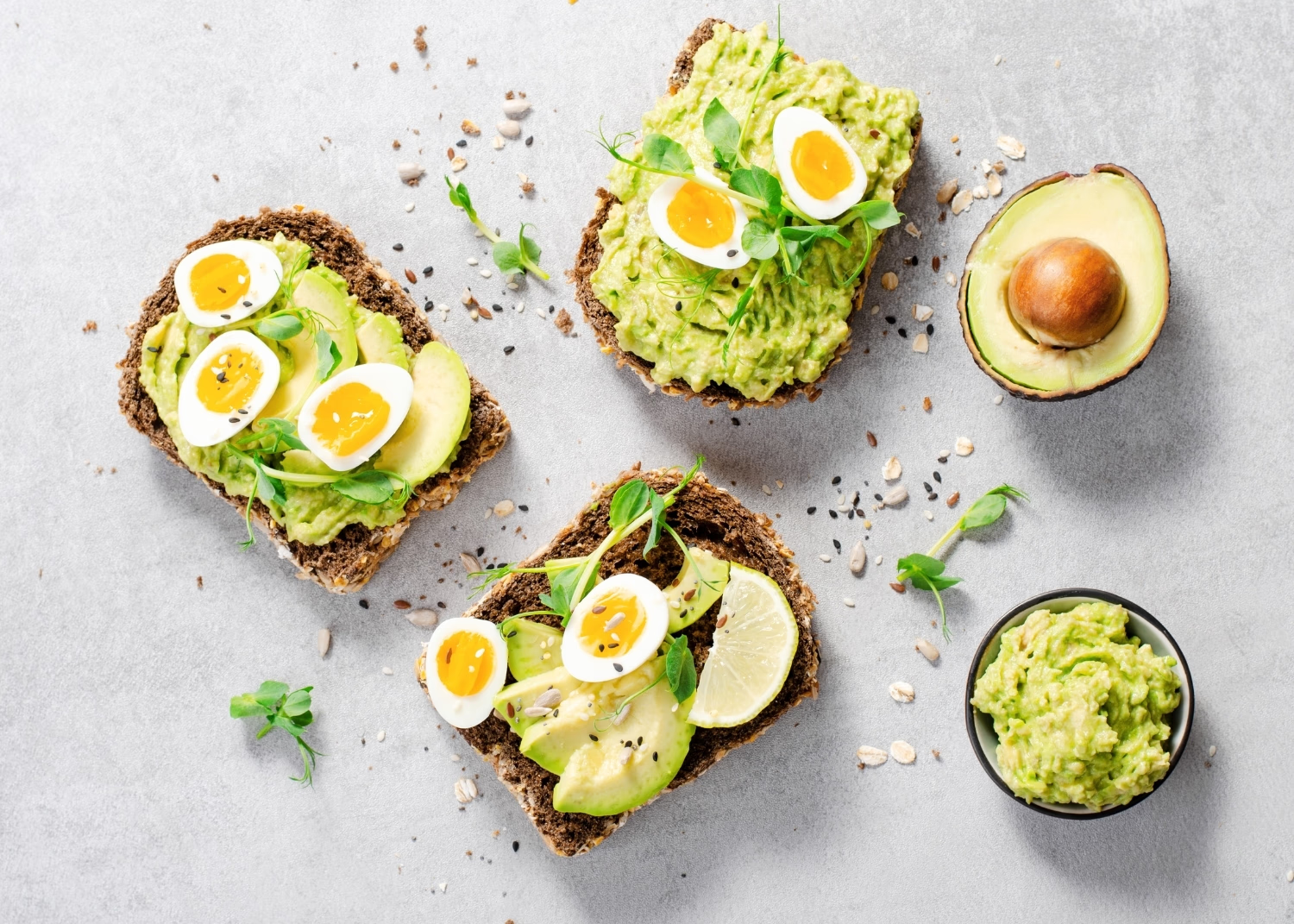
Introduction
Modern life keeps many people in a constant state of stress. Deadlines, poor sleep, and unhealthy eating habits all add up, and the body responds by releasing cortisol. While this hormone is essential for survival, too much of it over time can start affecting your energy, mood, and overall health.
This is where the idea of a cortisol detox diet comes in. It is not a quick fix or a strict “detox” in the traditional sense. Instead, it is a way of eating that supports your body in managing stress more effectively.
In this guide, you will learn how cortisol works, how your diet influences it, and how simple food choices can help you feel more balanced and in control.
What Is Cortisol and Why Should You Care?
Cortisol is often called the “stress hormone,” but that description only tells part of the story. It is produced by the adrenal glands and plays a key role in regulating metabolism, blood sugar, inflammation, and even your sleep cycle.
In short bursts, cortisol is helpful. It helps your body respond quickly to challenges. But when stress becomes constant, cortisol stays elevated longer than it should.
Over time, this can lead to fatigue, weight gain, poor sleep, and even increased risk of chronic health conditions. Research shows that long-term high cortisol levels may contribute to issues like high blood pressure and metabolic disorders.
That is why managing cortisol is less about eliminating it and more about keeping it in balance.
Signs Your Cortisol Levels May Be Too High
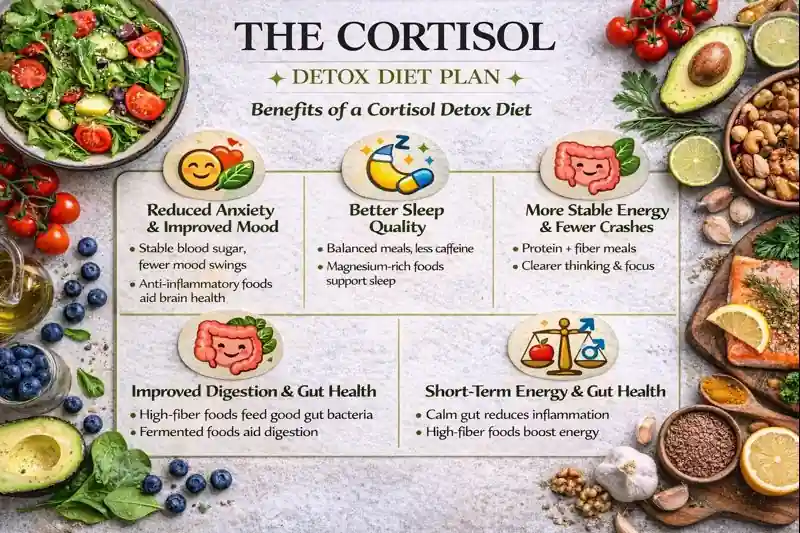
Your body usually gives signals when cortisol levels are out of balance. These signs are often subtle at first but become more noticeable over time.
You may feel tired even after a full night’s sleep. Some people notice stubborn weight gain, especially around the midsection. Sleep problems, including difficulty falling asleep or waking up frequently, are also common.
Mood changes can show up as irritability, anxiety, or feeling overwhelmed. Strong cravings for sugary or salty foods may also point to cortisol imbalance.
These symptoms do not confirm high cortisol on their own, but they often indicate that your body is under prolonged stress.
What Is a Cortisol Detox Diet?
A cortisol detox diet is simply a structured way of eating that supports hormone balance and reduces stress on the body.
It focuses on whole, nutrient-rich foods while limiting items that can trigger stress responses. Unlike extreme diets, it does not eliminate entire food groups or rely on short-term restrictions.
The idea is simple. When your body receives steady nutrition, stable blood sugar, and anti-inflammatory foods, it becomes easier to regulate cortisol naturally.
Experts also note that this approach works best when combined with lifestyle habits like proper sleep and stress management, rather than relying on diet alone.
How Diet Impacts Cortisol Levels
What you eat directly affects how your body handles stress. One of the biggest factors is blood sugar balance.
When you consume a lot of refined sugar or skip meals, your blood sugar rises and falls quickly. This fluctuation can trigger cortisol release as your body tries to stabilize energy levels.
Inflammation is another important factor. Diets high in processed foods and unhealthy fats can increase inflammation, which puts additional stress on the body and may elevate cortisol.
Gut health also plays a role. A healthy gut microbiome is linked to better mental health and stress regulation. Nutrient-dense foods help support this system and may reduce stress responses over time.
Best Foods to Include in a Cortisol Detox Diet
The goal is not perfection but consistency. Choosing the right foods regularly can make a noticeable difference.
Whole fruits and vegetables are a strong foundation. They provide antioxidants that help reduce inflammation and support overall health. Leafy greens, berries, and citrus fruits are especially helpful.
Whole grains such as oats, brown rice, and quinoa provide steady energy and prevent blood sugar spikes. This stability can help keep cortisol levels more balanced.
Healthy fats are equally important. Foods like nuts, seeds, and fatty fish contain omega-3 fatty acids, which are linked to improved brain health and reduced stress.
Protein sources such as eggs, chicken, legumes, and yogurt help maintain energy levels and support muscle repair.
Certain foods offer additional benefits. Dark chocolate, when consumed in moderation, contains compounds that may reduce stress responses. Green tea provides calming compounds that support relaxation while maintaining alertness.
Hydration is often overlooked but essential. Even mild dehydration can increase cortisol levels, so drinking enough water throughout the day matters.
Foods to Avoid for Lower Cortisol
Just as some foods support balance, others can make things worse if consumed too often.
Highly processed foods are one of the main culprits. They tend to be high in sugar, unhealthy fats, and additives that increase inflammation.
Excess sugar can lead to rapid spikes in blood glucose, followed by crashes that trigger cortisol release. Diets high in sugar and refined grains are associated with higher cortisol levels.
Caffeine, especially in large amounts or late in the day, can also raise cortisol. While small amounts may be fine, overconsumption can disrupt sleep and stress regulation.
Alcohol has a similar effect. It can interfere with sleep quality and increase stress hormone activity.
The key is moderation, not complete elimination.
Sample 1-Day Cortisol Detox Diet Plan
A practical approach makes it easier to stay consistent.
Breakfast can include oatmeal topped with berries and a handful of nuts. This provides fiber, healthy fats, and steady energy.
Lunch might be grilled chicken with brown rice and mixed vegetables. This combination supports balanced blood sugar and provides essential nutrients.
A snack could be yogurt with seeds or a piece of fruit, offering a mix of protein and natural sugars.
Dinner may include fish with steamed vegetables and quinoa. This meal supports recovery and provides omega-3 fats.
The idea is to keep meals balanced and avoid long gaps without eating.
Lifestyle Habits That Support a Cortisol Detox Diet
Diet alone is not enough. Your daily habits play a major role in how your body manages stress.
Sleep is one of the most important factors. Poor sleep can disrupt cortisol rhythms and make it harder for your body to recover.
Regular exercise helps, but intensity matters. Moderate activity can reduce cortisol over time, while excessive training may increase it.
Stress management techniques such as deep breathing, meditation, or even simple relaxation exercises can activate the body’s “rest and digest” system, helping lower cortisol.
Spending time doing things you enjoy also matters more than most people realize. Activities that bring joy can naturally reduce stress hormones.
Common Mistakes to Avoid
Many people approach a cortisol detox diet the wrong way.
One common mistake is skipping meals. This can lead to blood sugar drops and increased cortisol.
Another is following extreme diets that cut out entire food groups. These approaches are hard to maintain and may lead to nutrient deficiencies.
Relying only on supplements is also not effective. While some supplements may help slightly, they cannot replace a balanced lifestyle.
Ignoring mental health is another issue. Stress is not only physical, and addressing emotional well-being is just as important.
How Long Does It Take to See Results?There is no fixed timeline, and results vary from person to person.
Some people notice improved energy and better sleep within a few weeks. Others may take longer, especially if stress levels have been high for a long time.
The key is consistency. Small, steady changes often lead to more sustainable results than quick fixes.
Who Should Try a Cortisol Detox Diet?
This approach can benefit anyone dealing with ongoing stress.
It is particularly helpful for people who feel constantly tired, struggle with sleep, or experience frequent cravings.
Busy professionals, students, and anyone with a high-pressure lifestyle may find it useful as a way to support overall health.
When to Seek Medical Advice
While dietary changes can help, they are not a substitute for medical care.
If you experience severe symptoms such as extreme fatigue, unexplained weight changes, or persistent anxiety, it is important to consult a healthcare professional.
Hormonal imbalances can have multiple causes, and proper evaluation is essential.
ConclusionA cortisol detox diet is less about detoxing and more about supporting your body in a natural, sustainable way.
By focusing on whole foods, balanced meals, and healthy habits, you give your body the tools it needs to manage stress more effectively.
There is no need for extreme restrictions or complicated plans. Simple, consistent choices can go a long way in improving how you feel every day.
In the end, it is not about eliminating stress completely. It is about helping your body respond to it in a healthier, more balanced way.
What is the fastest way to lower cortisol naturally?
The fastest way to lower cortisol is by combining a balanced diet with proper rest and stress control. Eating regular meals, staying hydrated, and getting quality sleep can start improving cortisol levels within a short time. Simple habits like deep breathing and light exercise can also make a quick difference.
2. Can a cortisol detox diet really reduce stress?
Yes, it can help support stress management. A cortisol detox diet focuses on stabilizing blood sugar and reducing inflammation, both of which play a role in how your body handles stress. While it may not remove stress completely, it helps your body respond in a healthier way.
3. Is coffee bad for cortisol levels?
Coffee is not necessarily bad, but too much of it can increase cortisol levels, especially when consumed on an empty stomach or late in the day. Limiting intake to moderate amounts and pairing it with food can help reduce its impact.
4. How do I know if my cortisol levels are high?
Common signs include constant fatigue, poor sleep, weight gain around the belly, and frequent cravings. However, the only way to confirm high cortisol levels is through proper medical testing, so it is best to consult a healthcare professional if symptoms persist.
5. Do I need supplements for a cortisol detox diet?
In most cases, supplements are not necessary. A well-balanced diet rich in whole foods usually provides enough nutrients to support cortisol balance. Supplements may help in specific situations, but they should only be used with professional guidance.
FAQs Section
- What is the fastest way to reduce cortisol naturally?
- Can diet alone lower cortisol levels?
- Is coffee bad for cortisol?
- How do I know if my cortisol is high?
- Are supplements necessary for cortisol detox?
